
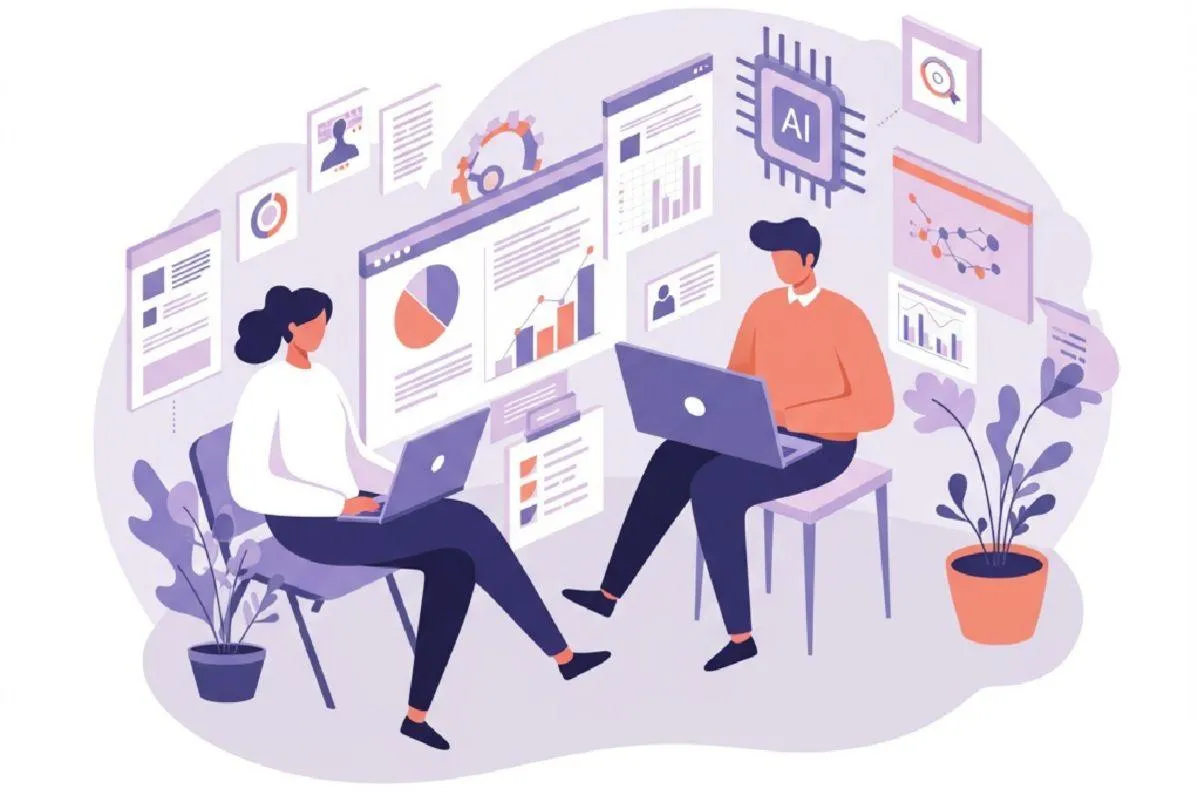
AI for Small Businesses in 2026
Everywhere you turn, someone is talking about artificial intelligence. From news headlines to vendor pitches, “AI” seems to promise a future that’s just around the corner, one where even the smallest business operates with the precision of a Silicon Valley giant. But many small business owners are left wondering whether any of this actually matters for a family-run shop, a local service provider, or a growing firm. The reality is less about robots taking over and more about subtle shifts already unfolding in the background of daily operations.
By 2026, AI won’t be an exotic add-on; it’ll be integrated into the tools small businesses rely on every day. The difference won’t be in who has the flashiest technology, but in who’s ready to put these new capabilities to work in practical, confidence-building ways. With the competitive landscape changing quickly, understanding what AI truly means for small businesses is no longer a theoretical exercise, it’s a matter of staying relevant, efficient, and resilient in the face of constant change.
What AI for Small Businesses Really Means in 2026
The topic of AI can feel intimidating and out of reach, especially for small business owners without an IT team. In practical terms, though, AI is software that analyzes patterns in data, automates repetitive tasks, and offers recommendations that help people make better decisions. For small businesses, that means less about “thinking machines” and more about digital assistants quietly improving accuracy and efficiency behind the scenes.
By 2026, AI won’t require custom development or deep technical expertise. Instead, it’ll come built into the business tools that owners and managers already use every day. Think about accounting software that flags unusual transactions before they become problems. Or a scheduling platform that automatically reshuffles appointments based on recent no-show patterns. Customer relationship management (CRM) systems will use AI to suggest which clients are most likely to respond to follow-up calls, while point-of-sale (POS) systems will recommend which inventory items are running low without anyone having to run a report.
The shift is from high-concept hype to grounded, everyday improvements. Forget about AI “running the whole company.” Instead, picture AI quietly drafting personalized email replies for a local repair service, or a small retailer’s marketing tool automatically segmenting customers for more targeted promotions. The AI in 2026 won’t be a mysterious black box, but a set of built-in features that take over the repetitive, data-heavy parts of running a business, making things easier, faster, and more reliable. For small businesses, AI is less about dramatic change and more about steady, manageable evolution.
Why 2026 Is a Turning Point for AI Adoption in Small Businesses
A few years ago, artificial intelligence was something only large enterprises could afford to experiment with: custom projects, big budgets, and specialist teams. That’s changing fast. By 2026, the cost of accessing AI will have dropped significantly, interfaces will be designed for non-technical users, and strong AI capabilities will be bundled into familiar SaaS tools. Improved data privacy controls and clearer regulations are also clarifying what’s safe and responsible, removing barriers that previously made small businesses hesitant to dive in.
Research from industry groups like the National Federation of Independent Business shows that small businesses adopting AI-driven tools see clear gains in efficiency and customer satisfaction compared to those that don’t.
This new accessibility is already reshaping how small businesses operate. Take two competing neighborhood retailers: one starts using an AI-powered inventory system that predicts which products will be in demand, while the other sticks to gut instinct and spreadsheets. Over time, the store using AI reduces stockouts and excess inventory, freeing up cash and keeping customers happier. A local professional services firm that uses AI-enabled scheduling responds faster to client requests, while competitors rely on manual methods and lose business to delays. Research from industry groups like the National Federation of Independent Business shows that small businesses adopting AI-driven tools see clear gains in efficiency and customer satisfaction compared to those that don’t.
Yet, even with these advantages, hesitation persists. Many small business leaders worry about the complexity of new technology, the upfront cost, or fear that automation means reducing their workforce. These concerns are understandable, but 2026 is a practical planning horizon: AI is becoming easier, safer, and more affordable to test. The real risk is waiting too long to get familiar with what’s possible. Building knowledge and confidence now helps small businesses choose the right tools and avoid being left behind as more competitors adopt AI-enabled systems.
Practical Ways Small Businesses Will Use AI in 2026
For small businesses, the most effective uses of AI in 2026 will be the ones that fit into daily routines, offering incremental improvements rather than demanding a total overhaul. On the customer-facing side, simple AI chat tools will handle routine questions on a retailer’s website, such as “Is this item in stock?” or “What are your hours?”, freeing up staff for more complex interactions. Email marketing platforms will automatically draft and personalize newsletter content based on customer purchase history, making campaigns feel more relevant without extra manual work. Local advertising will get smarter too, with AI analyzing which offers resonate best with nearby audiences and adjusting spend accordingly.
Back-office operations will see equally practical gains. Bookkeeping apps will use AI to categorize transactions with greater accuracy, reducing errors and the need for tedious reconciliations. A small clinic, for example, will rely on AI-driven scheduling to fill last-minute cancellations, maximizing utilization. Trades businesses will use AI to forecast which materials are needed for upcoming jobs, minimizing supply shortages or costly rush orders. HR platforms will assist with initial resume screens or drafting job descriptions, helping small teams save valuable time during hiring cycles.
AI’s role in decision support will be especially important. Instead of waiting weeks for end-of-month reports, business owners will get real-time dashboards that highlight trends, flag anomalies, and suggest pricing tweaks. An online retailer will receive AI-generated demand forecasts for popular products, adjusting inventory levels before a busy season. Service firms will use “what-if” scenario planning tools built into their existing dashboards to test the impact of schedule changes, new promotions, or staffing adjustments. These aren’t distant possibilities; they’re practical, built-in features designed to help small businesses work smarter, not harder.
How Small Businesses Can Start Preparing for AI Now
While 2026 sounds close, the best preparation happens well before new features arrive. One of the most important early steps is getting business data in order. Clean, well-organized records, consistent customer information, up-to-date inventory lists, and standardized billing lay the groundwork for any future AI tool to perform accurately. Consolidating software tools so that information isn’t scattered across a dozen apps also makes it much easier to adopt AI features as they become available. Documenting key processes, like how invoices are approved or how customers are onboarded, creates a clear roadmap for where automation will provide the biggest lift.
There’s also value in experimenting with what’s already available without major investment or risk. Many accounting, scheduling, and marketing tools already offer AI-powered features, such as automated suggestions or content drafts. Trying out these options gives small business teams hands-on experience and helps identify where AI saves time or reduces errors. Running a small internal pilot, like letting an AI assistant draft social media posts before human review, offers low-stakes insight into what works well and where human oversight is still essential.
The greatest gains for small businesses won’t come from chasing the latest buzzwords, but from quietly building the habits that allow them to plug into new capabilities as they emerge.
Building AI readiness is as much about people as technology. Upskilling staff in basic digital literacy, encouraging curiosity about new tools, and setting clear guidelines for responsible use all help pave the way for a confident transition. Industry research from organizations such as the Small Business & Entrepreneurship Council shows that companies investing in digital upskilling and process documentation are better positioned to benefit from AI as it matures. For small businesses, the most successful path is one of steady preparation: organized data, informed people, and a willingness to experiment without racing into big, risky projects before it makes sense.
Looking Ahead: AI as a Strategic Advantage, Not a Silver Bullet
By 2026, AI will be less about bold predictions and more about everyday value. The greatest gains for small businesses won’t come from chasing the latest buzzwords, but from quietly building the habits that allow them to plug into new capabilities as they emerge. In a market where efficiency, customer experience, and adaptability matter more than ever, being AI-ready will set the foundation for long-term resilience. The real question isn’t whether AI will become important, but how small businesses choose to prepare for and shape this next chapter in their work.
